Building an Apartment Building in Limassol, Cyprus
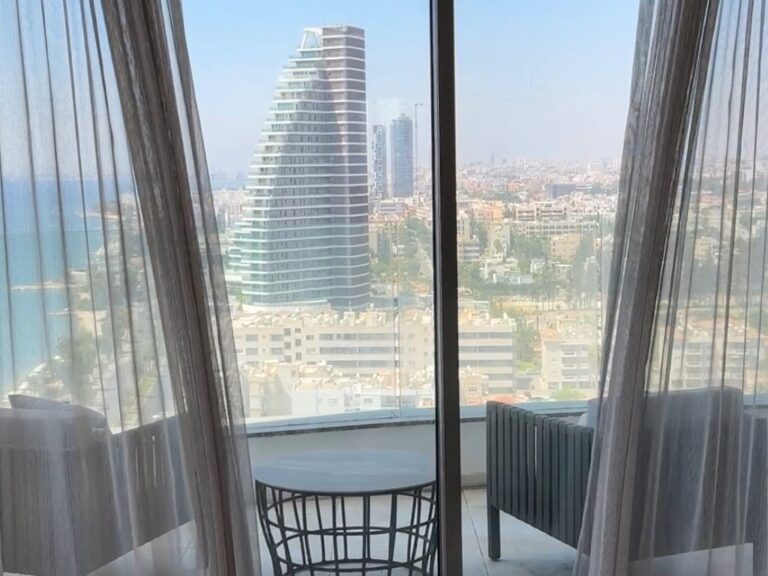
We have been living in Limassol, Cyprus, since May 2021. After settling in a bit and beginning to understand Limassol’s potential, a city experiencing growth and modernization, with many tech companies arriving ,we decided it would be worthwhile to invest in real estate here.
After some searching, we found an opportunity and bought an investment apartment in the city center. We did a full renovation, and the apartment was successfully rented to a family working in the tech sector.
After some time, we came across a very large apartment, half a floor, in a super-central location, offered for sale at a very low price relative to the market. We were the first to see it and immediately submitted an offer. Originally, the plan was to do a small renovation and rent it out as an investment, but around the same time, our rent in the apartment we were living in increased, and it had also become a little small for us. So, we decided to do a more significant renovation and move in ourselves.
While we were in the middle of renovating our apartment, my husband, Roman, shared with me that he had a new goal in real estate, an ambitious one, especially for people who hadn’t come from the field, but one he believed was possible.
When I asked him what the goal was, he simply said:
Build a residential building in Limassol.
Of course, I thought he was joking. But I quickly realized he was completely serious.
In 2023, over about six months, Roman searched for a plot in a central location in Limassol at a reasonable price. It’s important to note that this was not easy at all. Real estate prices in Cyprus have increased significantly in recent years, and we were not willing to compromise on a location that wasn’t prime. When we moved here during the COVID-19 period, prices were still relatively low, but within a year to a year and a half, they had already soared.
After a challenging search, he found a plot he really connected with, at a price considered attractive relative to the market. The plot is about 450 square meters, and after checks, we determined it was suitable for building a small boutique building.
It was clear that we couldn’t finance the project solely from our own capital, so Roman decided to look for a partner. I prepared a structured presentation, and he approached several potential investors who he thought might be interested in the idea. I admit I was quite skeptical, but fortunately, he managed to find a partner who believed in the project and agreed to a 50/50 partnership.
And so, after finding the partner, we began the process.
Step One: Purchasing a Plot in Limassol
It’s important to consider that purchasing a plot or apartment in Cyprus can take quite some time, sometimes several months, and in some cases, even half a year.
After signing a memorandum of understanding, comprehensive checks on the property must be conducted with a lawyer and an architect, a process that usually takes two to three weeks.
After that, the seller must issue a Tax Clearance, a certificate showing that all taxes and utility bills for the property have been paid. This process can take around two months, and sometimes even three, depending on holidays and the pace (or mood) of the Cypriots.
If one of the buyers does not have an EU passport, a special purchase permit is also required. This process also takes about two months, but can be done in parallel with obtaining the Tax Clearance.
Additionally, if the buyer plans to take a bank loan, additional time must be considered for bank approval and loan processing.
Only after all approvals, including the Tax Clearance, can a Land Registry appointment be scheduled to transfer ownership. In Limassol, such an appointment usually requires at least a month of waiting.
Sometimes it also takes time to schedule the meeting at the Land Registry office itself, and the preparation of the legal contract, which requires review and approval by lawyers on both sides, can further extend the process until all conditions are agreed upon.
In our case, we had sufficient equity to purchase the plot without a bank loan, so the process moved slightly faster than usual. In February 2024, the plot officially became ours and the partner’s, marking the start of the first practical phase of the project.
Step Two: Planning the Building with the Architect
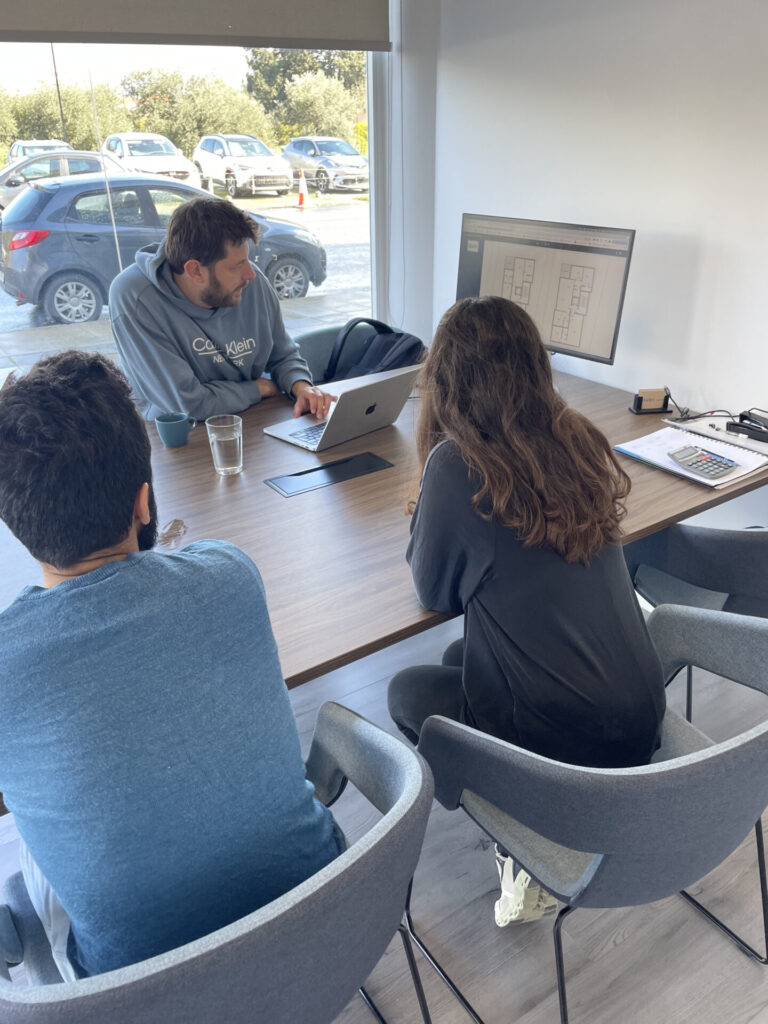
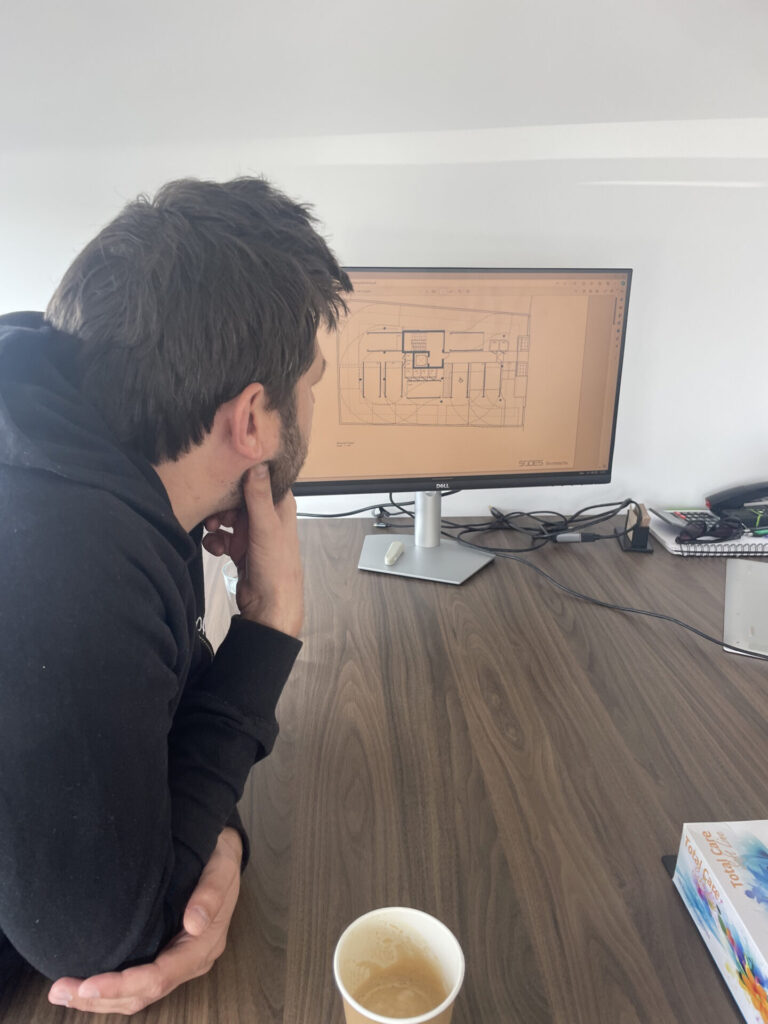
After acquiring the plot, we met with our architects to begin defining the vision for the building and moving the process forward. Even in the initial plans, most of the major decisions had to be made: the size of each apartment, the number of floors, room layouts, storage areas, parking, and more. Therefore, we held several meetings to refine all the details and reach a precise, cohesive plan.
Our architects are a married couple whom we met by chance at a playground shortly after moving to Limassol, initially just to arrange a playdate for our kids. During our conversation, we discovered they were architects, and when we bought our first investment apartment, we reached out to them to work together. Since then, a good professional relationship has developed: they designed the renovation of our residential apartment, and now they are guiding us through the building planning process.
The process of creating all the plans and materials required for the building took about three months, after which we moved on to the permits phase.
Step Three: Submitting Plans to Obtain the First Building Permit
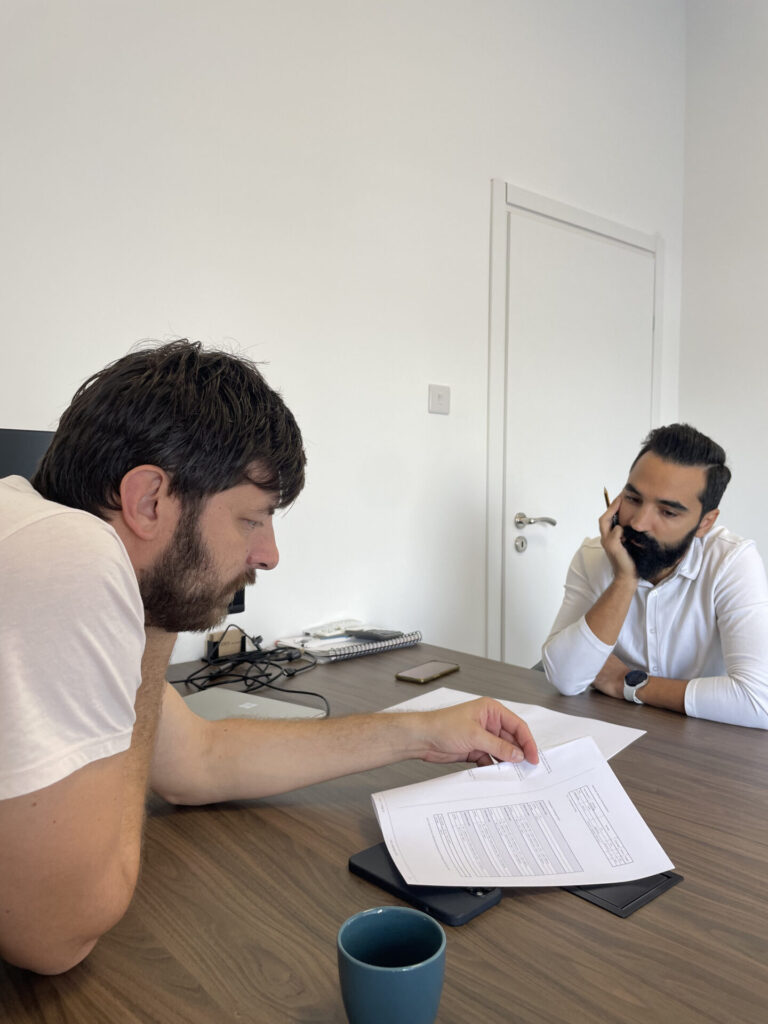
To start a construction project in Limassol, three approvals are required: a planning permit, a demolition permit (if a structure exists on the plot), and a building permit.
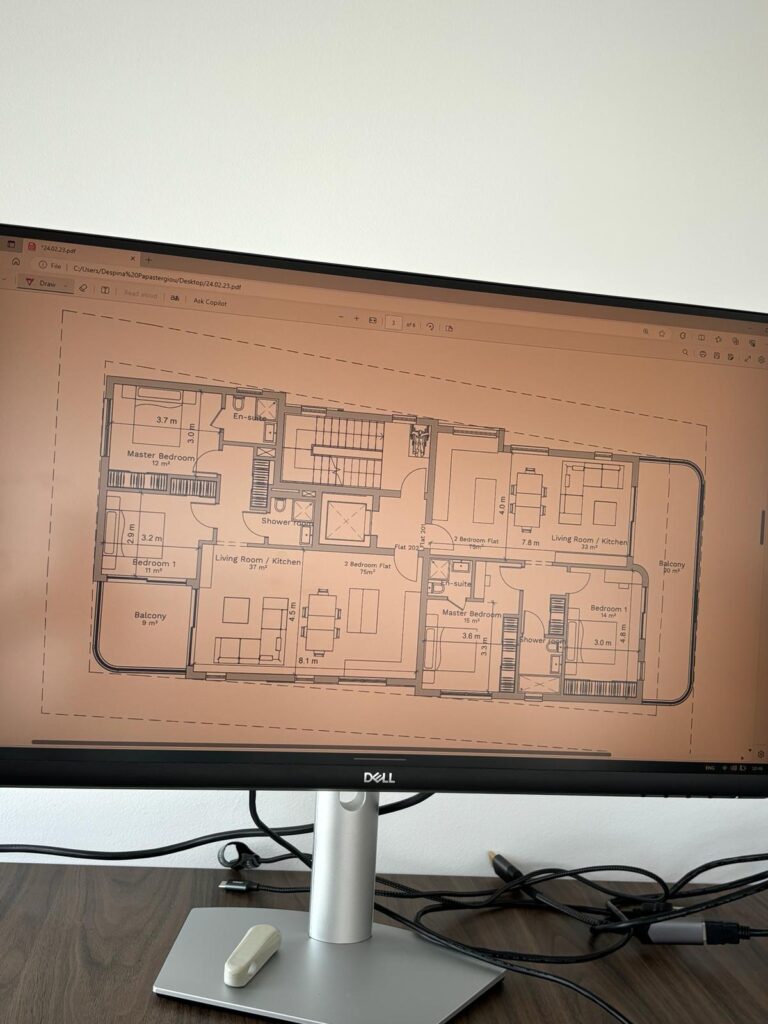
The first stage in obtaining building permits is the planning permit, which includes all the details of the building: apartment sizes, room layouts, parking, storage, and more. This stage is considered the longest, as it must comply with all municipal regulations and the City Building Plan (TBP), and it is not uncommon to have multiple rounds of rejections from the planning department. For us, this process took about five months,a relatively quick time, especially for a small project like ours.
In recent years, changes have been made to Cyprus’s building law to streamline and accelerate the permit process, mainly through a computerized system called Ippodamos. The changes include the ability to issue permits within a fixed period of up to 80 working days for small to medium projects, reducing bureaucracy in documents, and cooperation with private consultants who approve the validity of the application.
Nevertheless, despite these reforms, obtaining a building permit is still considered long and complex, requiring patience, consistency, and close collaboration with authorities and consultants.
Step Four: Designing the Building
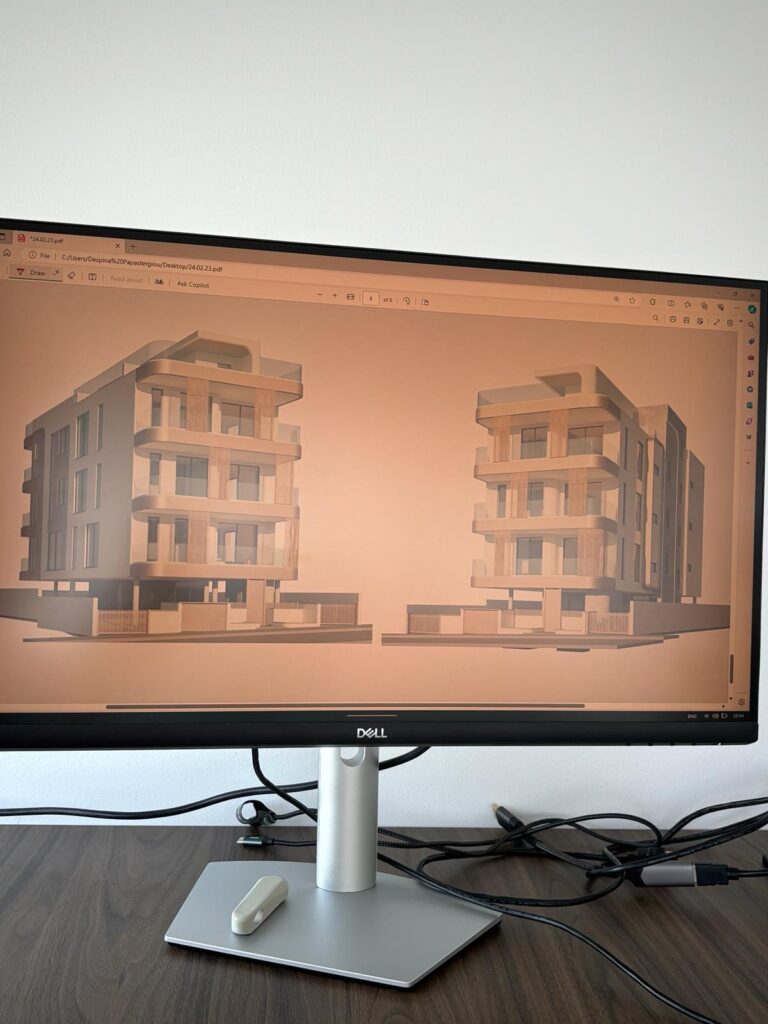
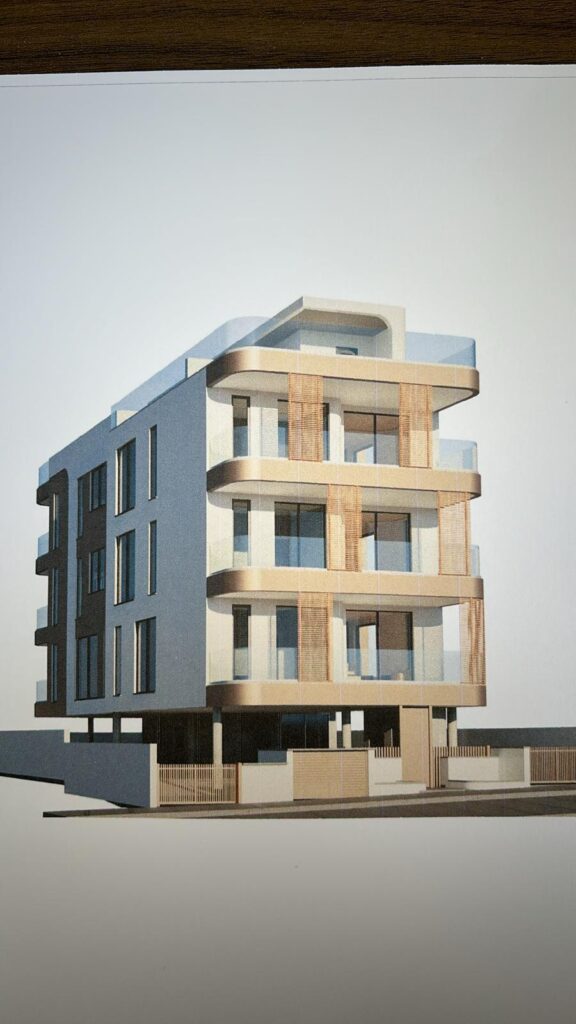
After receiving the initial planning permit, we began working with the architects on designing the entire building, from the parking area and lobby to the storage rooms and each apartment. We held several meetings to refine every detail and ensure that the building would be functional as well as aesthetically pleasing.
Our goal was to achieve a modern and high-quality design without making the project overly luxurious, in order to keep construction costs within a reasonable budget.
After finalizing the design decisions, we also sought additional professional opinions on the construction plans, including those of electricians and contractors, to ensure no technical changes were needed before submitting the plans for final approval. This step was crucial to prevent future problems and ensure the design met both construction reality and regulatory requirements.
Step Five: Approaching the Bank for Financing
During the investor recruitment stage, Roman held meetings with contractors to get a rough estimate of construction costs. At this stage, with only preliminary plans and no detailed bills of quantities, the estimates were very general and valid only for that time.
When we reached the stage where we could start looking for a contractor, construction costs had increased, and even with detailed bills of quantities, the proposals we received were several hundred thousand euros higher than initially planned. Apartment prices in Limassol had risen even more, so it wasn’t a major issue, but since the investment was already high from the start, we decided with our partner to include bank financing to cover part of the construction.
Obtaining financing from banks in Cyprus is not simple, especially for those with no prior experience building apartment buildings and who have lived in the country for only a few years. Therefore, we decided to hire a professional specializing in bank mediation, someone familiar with the local system who knows how to present projects in a way that maximizes the chance of approval. Their role was to prepare the submission, present our data to the banks, and assist us in negotiating financing terms. Of course, success is not guaranteed, and the service must be paid for even if no proposal is accepted, but for us, it was the most effective way to maximize our chances.
About a month later, we received preliminary approval from two banks under excellent terms and decided to proceed with them. The process involved several months of document submission, repeated discussions about financing terms, and various adjustments until full agreement was reached. Finally, in October 2025, we signed the final financing approval with the bank,a significant milestone that gave us the confidence to begin the practical construction phase.
Step Six: Obtaining Contractor Quotes
While waiting for the final building permit and bank financing approval, we started approaching contractors for construction quotes. At this stage, it is important to prepare a detailed and comprehensive document specifying every aspect of the construction work, from foundations and infrastructure to cladding, electricity, plumbing, lobby, storage rooms, parking, and interior finishes of the apartments.
Such a document allows each contractor to accurately estimate the costs of the different parts and provide a total quote. The more precise the document and the more it covers all requirements, the easier it is to compare proposals and make an informed decision.
Roman worked on this document day and night to ensure every small detail was included and expectations with the contractor were completely clear. After receiving quotes from several contractors, including some large, well-known companies, we decided to go with the contractor who had renovated our two previous apartments. This is a local, professional, and reliable contractor, and at the stage where we are starting our first project with no prior experience, it was important for us to have familiar and trustworthy people by our side.
Step Seven: Hiring a Construction Supervisor
Despite our full trust in the contractor and architects, we realized it was essential to hire a professional construction supervisor. This is someone who will be present throughout the process, check that the work is done according to plans and at the required quality, and act as a mediator between the contractor if issues or uncertainties arise.
Although we can visit the site and the architects monitor the work, we don’t have the technical knowledge to ensure every detail is executed correctly, according to the plans, and at the quality we expect.
Roman found an Israeli construction supervisor he connected well with, and we decided to move forward with him. Our supervisor ensures the project runs smoothly, helps us make the right decisions in real time, and provides peace of mind at every stage of the construction process.
Step Eight: Demolition Approval and Start of Demolition
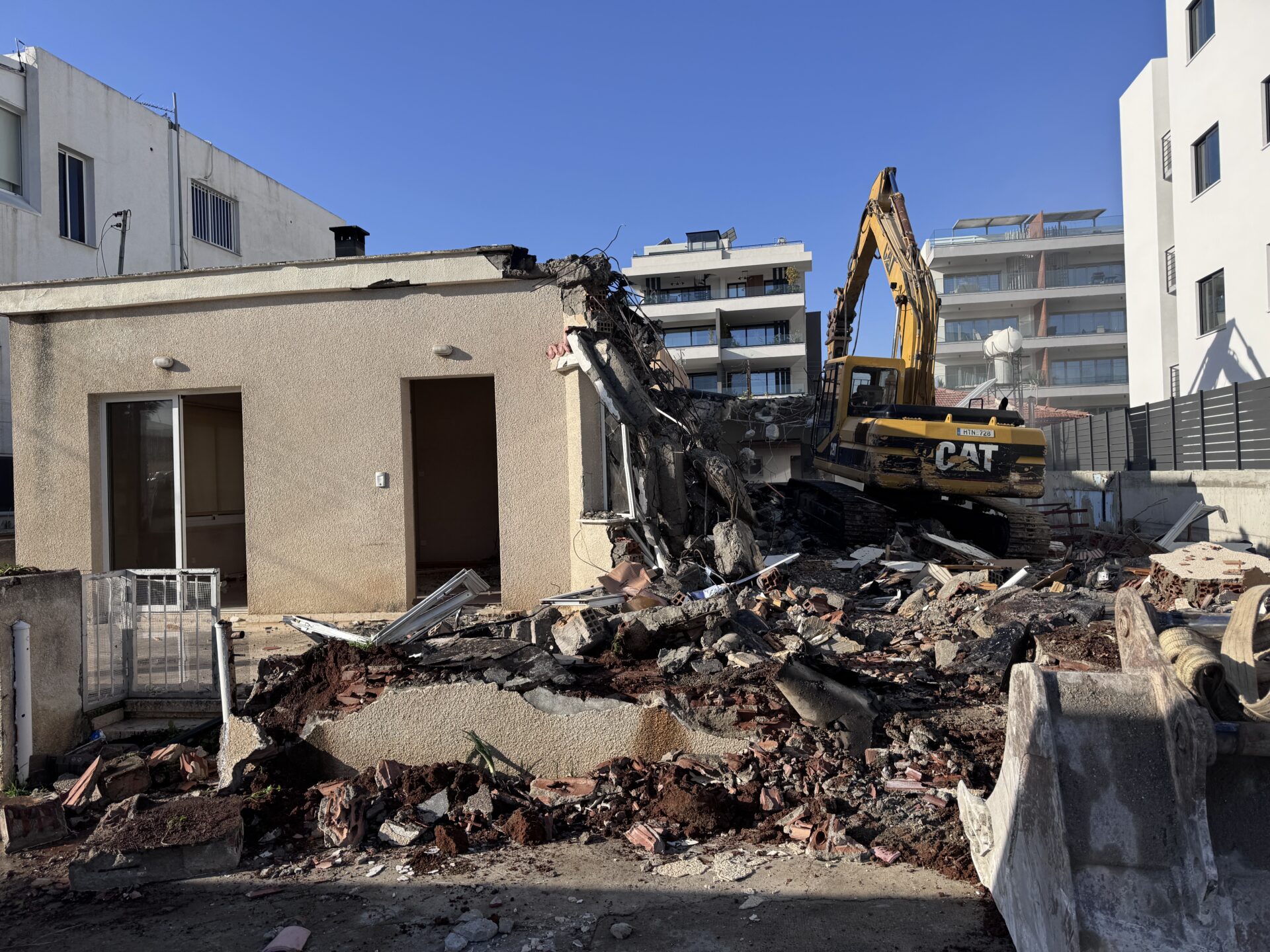
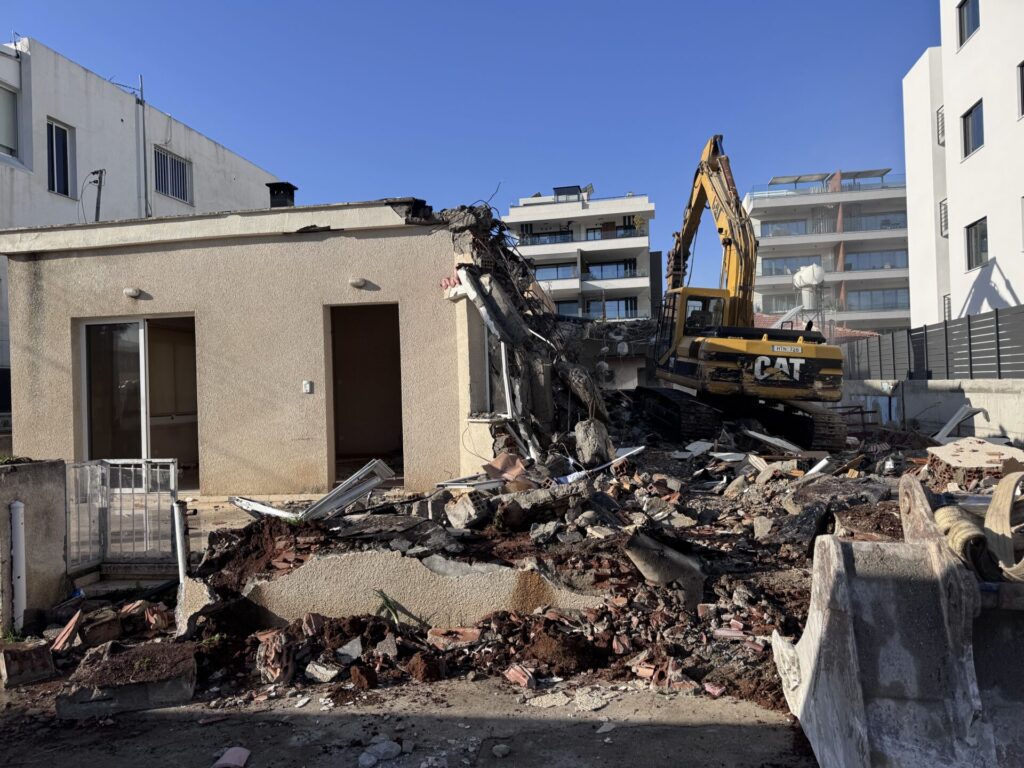
After signing with the contractor, the construction supervisor, and obtaining bank financing approval, we waited for approval to demolish the old villa on our plot. In December 2025, we received the permit, and in January, right after Christmas, we began demolition work.
Step Nine: Waiting for Final Approval and Start of Construction
We are currently at this stage 🙂 With high hopes, during January 2026, we expect to receive the final and last approval. Once this happens, we will be able to begin actual construction. The estimated construction period is about a year and a half, and we look forward to seeing our building grow day by day.
If you are interested in real estate investment opportunities in Cyprus, feel free to contact us, we would be happy to share our experience and help you start a similar project, including connecting you with professionals in the field.
We also have a WhatsApp group for real estate investments in Cyprus. Feel free to join! Link to the group.